Source Skin Tightening Led Therapy Bed for Salon Home Spa
Compare 23 skin tightening led therapy bed models from verified Chinese manufacturers. Buyers can evaluate wavelength options, irradiance levels, and warranty terms for salon or home use applications.
Key considerations
Products List




Comprehensive Sourcing Guide
Strategic Sourcing Guide for Skin Tightening LED Therapy Beds
The global demand for non-invasive aesthetic treatments has driven significant innovation in LED therapy equipment, specifically targeting skin tightening and rejuvenation. For procurement professionals in the beauty and wellness sector, sourcing a skin tightening LED therapy bed requires a meticulous approach that balances technical performance with regulatory compliance and long-term operational reliability. This guide synthesizes available product data and industry standards to provide a structured framework for evaluating suppliers and selecting equipment that meets rigorous commercial and clinical requirements.
Technical Specifications and Wavelength Analysis
The efficacy of an LED therapy bed is fundamentally determined by its optical output, particularly the wavelength spectrum and irradiance levels. In the context of skin tightening, the device must deliver specific wavelengths that penetrate the dermis to stimulate collagen and elastin production. Available data indicates that high-performance units often utilize a multi-wavelength approach, with observed ranges including 450nm, 635nm, 660nm, 810nm, 850nm, and 940nm. The inclusion of red light (635nm-660nm) and near-infrared light (810nm-940nm) is critical, as these bands are scientifically associated with tissue repair and collagen stimulation.
When evaluating a potential supplier, buyers must verify the specific wavelength options available for their model. Some units offer fixed configurations, while others provide optional different wavelength controls to tailor treatments for various skin types and conditions. The optical irradiance, measured in milliwatts per square centimeter (MW/Cm2), is another vital metric. Observed specifications for premium beds indicate irradiance levels ranging from 50 MW/Cm2 to 150 MW/Cm2, with some high-power models reaching up to 120 MW/Cm2. This intensity directly correlates with treatment efficiency; however, it must be balanced against safety protocols to prevent thermal damage.
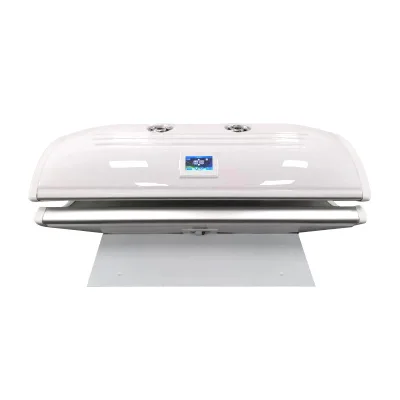
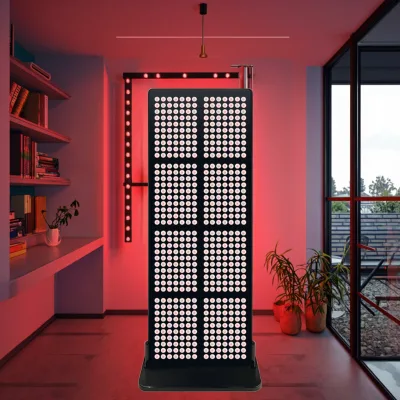
The physical configuration of the light source also impacts performance. Data suggests that effective beds may contain between 3,600 and 26,400 individual LED components, often arranged in strips or panels. For instance, a configuration utilizing 80 LED strips or 26,400 LEDs with lenses is designed to ensure uniform coverage across the body. Buyers should request detailed schematics to confirm the distribution of these LEDs and ensure there are no "cold spots" where the light intensity drops below the therapeutic threshold. Additionally, the total power output, observed in the range of 2.2kW to 3.5kW, influences the speed and depth of the treatment. A higher wattage generally allows for shorter treatment cycles, which can increase client throughput in a commercial setting.
Operational Parameters and User Interface Design
Beyond optical metrics, the operational capabilities of the machine define its usability and versatility in a salon or clinic environment. The control interface is a primary point of interaction for technicians, and modern units increasingly feature advanced touchscreens. Specifications indicate the availability of 7-inch touch control screens that allow for precise adjustments. These interfaces should support a wide range of settings, including time settings from 0 to 30 minutes and frequency controls ranging from 0 to 5000Hz. The ability to adjust frequency is particularly relevant for machines that combine LED therapy with other modalities, such as radio frequency or E-Light technology, although the core focus here remains on LED efficacy.
Customization options are essential for tailoring treatments to individual client needs. Some units offer optional controls for different wavelengths, allowing the operator to select specific bands for targeted therapy. Furthermore, connectivity features like WiFi control are becoming standard, enabling remote management or integration with digital health records. The treatment time is a critical factor for business operations; recommended treatment times typically range from 10 to 15 minutes, with maximum settings extending to 30 minutes. Buyers must verify that the machine's timer settings align with the desired session length to ensure efficient scheduling.
The durability of the LED components is another operational consideration. The service life of the LEDs is a key indicator of long-term value, with observed specifications citing a lifespan of up to 100,000 hours. This longevity reduces the frequency of maintenance and replacement costs. However, buyers should also inquire about the specific warranty terms for the LED strips versus the main machine, as some suppliers offer a 1-year warranty for the machine and a separate 2-year warranty for the LED strips. Understanding these distinctions is crucial for budgeting future maintenance expenses.
Compliance, Certification, and Safety Standards
Navigating the regulatory landscape is a non-negotiable aspect of sourcing medical and aesthetic devices. In the international market, certifications such as CE and FDA are often the baseline requirements for market entry and client trust. The provided data confirms that certain models carry FDA and CE certifications, which validate the device's safety and compliance with European and American standards. However, buyers must not assume that all listed products possess these certifications without explicit verification. The presence of a certification mark on a product listing does not guarantee that the specific batch or model being purchased is certified; it is the supplier's responsibility to provide valid documentation.
In addition to product-specific certifications, the manufacturing facility should ideally adhere to quality management standards such as ISO 13485, which is specific to medical devices. While this standard is not explicitly confirmed for every unit in the general data, it is a strong indicator of a supplier's commitment to quality control. Buyers should request copies of the CE Declaration of Conformity and FDA 510(k) clearance documents (if applicable) before finalizing a purchase. These documents should clearly list the model number and the specific safety standards met.
Safety features must also be integrated into the design. The input voltage for these machines typically ranges from AC100V to AC380V, accommodating various global power standards. This flexibility is essential for buyers operating in multiple regions or importing from different origins. The physical dimensions of the unit, such as a standard size of approximately 20111097cm or 1959085cm, must be considered in relation to the available space in the treatment room. Furthermore, the net weight, observed around 100kg, indicates that the unit is substantial and may require professional installation or specific floor reinforcement.
Cost Drivers and Pricing Structure
The pricing of skin tightening LED therapy beds varies significantly based on the complexity of the technology, the number of LEDs, and the level of certification. The observed price range for these units spans from $660 to $25,600 USD. This wide disparity reflects differences in build quality, power output, and feature sets. Lower-priced units may offer basic functionality with fewer LEDs and standard wavelengths, while high-end models command premium prices due to advanced features like WiFi control, extensive wavelength options, and higher irradiance levels.
When analyzing cost, buyers should look beyond the initial purchase price to consider the total cost of ownership. This includes the cost of spare parts, the warranty terms, and the expected lifespan of the LEDs. A unit with a lower upfront cost but a short LED lifespan or limited warranty may prove more expensive over time due to replacement costs and downtime. The Minimum Order Quantity (MOQ) is another financial factor, with observed ranges from 1 to 10 units. For smaller clinics, an MOQ of 1 is preferable, whereas larger chains may negotiate better pricing for bulk orders.
Packaging and logistics also influence the final cost. Units are typically shipped in wood crates or cartons, with dimensions that affect shipping fees. The origin of the product, often China or specifically Shenzhen, Guangdong, impacts shipping times and import duties. Buyers should factor in these logistics costs when comparing quotes from different suppliers. Additionally, the availability of after-sales service, such as free spare parts, can significantly reduce long-term operational costs. A supplier offering a comprehensive support package may justify a higher initial price through reduced maintenance expenses.
Supplier Evaluation and Quality Assurance
Selecting the right supplier is as important as selecting the right product. Buyers should prioritize suppliers who provide transparent technical documentation and are willing to undergo a rigorous vetting process. Key evaluation criteria include the supplier's history, their manufacturing capabilities, and their track record for after-sales support. The availability of free spare parts is a strong indicator of a supplier's confidence in their product and their commitment to customer satisfaction.
Quality control measures should be verified through third-party testing reports or factory audits. Buyers should request evidence of the LED quality, such as the number of LEDs per unit and the specific type of lenses used. For instance, units with "3500 Big LEDs with Lens" or "26400PCS" of LEDs offer different levels of coverage and intensity. The supplier should be able to explain the engineering behind their LED arrangement and how it ensures uniform light distribution.
The production origin is another critical factor. Many units originate from Shenzhen, Guangdong, a hub for electronics manufacturing. While this region offers competitive pricing and advanced technology, buyers must ensure that the specific factory adheres to strict quality control protocols. Requesting a sample unit for testing before placing a large order is a prudent strategy. This allows the buyer to verify the actual irradiance levels, the functionality of the touch screen, and the durability of the build.
Application Scenarios and Long-Term Procurement Strategy
The versatility of skin tightening LED therapy beds makes them suitable for a wide range of applications. The target areas typically include the body, face, feet, and head, allowing for comprehensive treatment protocols. Some units are also marketed for additional benefits such as fat burning, weight loss, and pain relief, though these claims should be validated against the specific wavelength and power output of the device. The ability to treat multiple areas with a single machine increases its value proposition for clinics offering full-body services.
For long-term procurement, buyers should consider the scalability of the equipment. As a business grows, the ability to add more units or upgrade existing ones with new features is important. The modularity of the design, such as the option to customize the control unit with setup videos or QR codes, can enhance the user experience and reduce training time for new staff. Furthermore, the warranty period, typically 1 to 2 years, should be a key negotiation point. Extending the warranty or securing a service contract can provide peace of mind and protect the investment.
In conclusion, sourcing a skin tightening LED therapy bed requires a balanced approach that considers technical specifications, regulatory compliance, cost efficiency, and supplier reliability. By carefully evaluating the wavelength options, irradiance levels, and operational features, buyers can select equipment that delivers effective results for their clients. Adhering to strict quality control standards and verifying certifications ensures that the purchased units meet safety and performance expectations. Ultimately, a strategic procurement process that focuses on long-term value and supplier partnership will yield the best outcomes for any aesthetic business.
| Feature Category | Key Specifications to Verify | Typical Observed Range | Importance for Procurement |
|---|---|---|---|
| Wavelength | Specific nm values (e.g., 635nm, 850nm) | 450nm - 940nm | Determines efficacy for skin tightening vs. other treatments. |
| Irradiance | Power density (MW/Cm2) | 50 - 150 MW/Cm2 | Affects treatment speed and depth of penetration. |
| LED Quantity | Total number of LEDs | 3,600 - 26,400 PCS | Influences coverage area and uniformity of light. |
| Power Output | Total wattage | 2.2kW - 3.5kW | Impacts energy consumption and treatment intensity. |
| Warranty | Duration for machine and LEDs | 1-2 Years | Critical for long-term cost management and risk mitigation. |
| Certification | FDA, CE, ISO 13485 | Varies by model | Mandatory for legal compliance and market entry. |
| Control Interface | Touchscreen size, WiFi capability | 7-inch, Optional WiFi | Enhances user experience and operational efficiency. |
FAQs
What wavelengths does the skin tightening led therapy bed use?
The device utilizes multiple wavelengths including 635nm, 660nm, 810nm, 850nm, and 940nm. Some models offer optional controls to select specific bands like 450nm for targeted skin treatments and rejuvenation protocols.
Can the skin tightening led therapy bed be customized for buyers?
Yes, customization is available for this equipment. Buyers can request specific touch screen setups, video guides, or QR code integrations to tailor the user interface for their specific salon or clinic needs.
How long is the warranty period for the machine and LEDs?
Warranty terms vary by component, with some units offering one year for the machine and two years for the LED strips. Other models provide a comprehensive two-year warranty covering the entire system for peace of mind.
Which certifications are available for the skin tightening led therapy bed?
Certain models carry FDA and CE certifications to ensure safety and regulatory compliance. Buyers should verify specific documentation for the batch they purchase to confirm these standards are met for their region.
What is the power output of the skin tightening led therapy bed?
Output power ranges from 2.2kW to 3.5kW depending on the specific configuration. Higher wattage models support faster treatment cycles and deeper tissue penetration for effective skin tightening and fat burning applications.
How many LEDs are included in the skin tightening led therapy bed?
The unit contains between 3,600 and 26,400 LED components arranged in strips or panels. This high quantity ensures uniform light distribution across the body, face, and other target areas for consistent therapeutic results.
What is the irradiance level of the skin tightening led therapy bed?
Irradiance levels typically range from 50 to 150 MW/Cm2 depending on the model. This intensity ensures effective collagen stimulation while maintaining safety protocols for non-invasive skin tightening treatments in professional settings.